Paul Defends His Right To Be Supported
Ministries > Somebody Loves You with Raul Ries
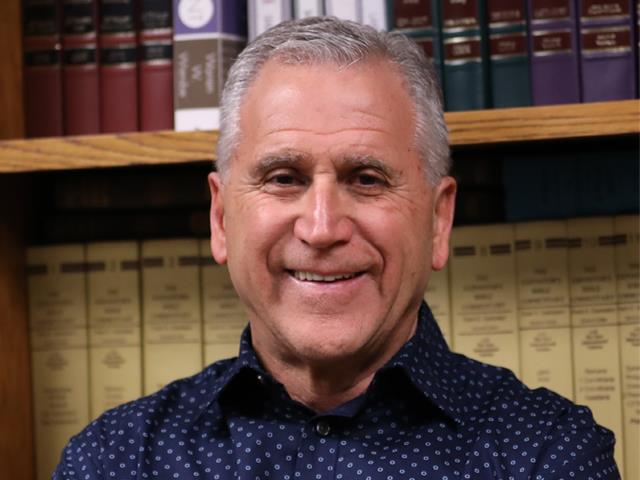
On today’s lesson we’ll learn how to manage ministry and finances in a godly way. Pastor Raul will show you that whether you’re raising support for full-time outreach or operating in the workforce while serving in ministry part-time, you can trust the Lord to provide for your needs as you daily share His love. Learn more on Somebody Loves You with Raul Ries.
References
Raul Ries: Bosses, I would rather go get a job—and he did, making tents—than to sit there and make a face and walk in to make people feel sorry for me because I don't have any income, and then they'll gather together and give me income. He says, "That's not right. That's not right. It's better to wait upon the Lord for God to do it."
Guest (Male): Welcome to Somebody Loves You Radio, the Bible teaching ministry of Raul Ries in Diamond Bar, California. How do you manage your finances in a godly way? That's the topic of today's lesson as Raul continues our series in First Corinthians. Raul will show us that whether we're raising support for full-time outreach or operating in the workforce while serving in ministry part-time, we can trust the Lord to provide everything we need as we share God's Word. Here's Raul Ries in First Corinthians, Chapter 9.
Raul Ries: The title of this chapter is Paul defended his right to be supported, and yet at the same time, Paul didn't want any money from them. He was not asking or begging. One of the things about ministry, I just want to clarify some things here because Paul the Apostle, quote, he says, "Christian liberty is not to be used as an opportunity to behave in ways that will bring disrepute to Christ or injury to His children." Think of how many churches not only have hurt people—and what I mean by hurting people is all the rules and regulations they make up instead of really being led by the Holy Spirit through the Word of God. And then at the same time, Paul the Apostle in being supported financially, he says that he did not even want to take one penny from anybody. And yet when you hear people today, they're always asking for money. And then what happens to that philosophy that Calvary Chapel has that where the Lord leads, He provides? So what we want to do is we want to make sure that we stay in our boundaries concerning the Word of God, not what men make up, all these rules and regulations. So we need to understand that Christian liberty is not to be abused or to use as an opportunity to behave in ways that are not biblical, but to stick right to the Word of God. And this is what Paul does here in Chapter 9. Notice how he begins Chapter 9 this evening. He's going to talk about his apostleship, who he was. So Paul begins this letter by saying this, verse 1 of Chapter 9. He says, "Am I not an apostle? Am I not free? Have I not seen Jesus Christ our Lord? Are you not my work in the Lord?" So he's asking four rhetorical questions as he begins this chapter. And what's incredible, he's saying, "If I'm not an apostle of Jesus Christ, then I don't have the right to write this letter." And yet he was called to be a servant and an apostle of Jesus Christ. And then at the same time, he says, "Have I not seen Jesus Christ our Lord?" Of course, that was one of the requirements. And Paul the Apostle was the last one to see Him in His resurrected body when he saw Him on the road to Damascus. The Lord appeared to him, and he saw Him. And He said, "Saul, Saul, why do you continue to persecute Me?" And he said, "Is that You, Jesus?" And from that point on, Paul the Apostle was a different person. He became born again of the Holy Spirit. And then he says, "Are you not my work in the Lord?" Notice that. "Are you not my work in the Lord?" I mean, look what God has done as I've given you the Gospel of Jesus Christ and many of you have responded to the Gospel of Jesus Christ. But what Paul is saying, he's not taking credit for what God did through him. We should never, ever take credit for whatever we do for Jesus Christ. All the credit, all the honor belongs to Him fully and completely. Verse 2, he says, "If I am an apostle to others, yet doubtless I am to you, for you are the seal of my apostleship in the Lord." Notice where here Paul the Apostle is actually bringing out to them and saying, "You guys, if I'm not an apostle of Jesus Christ, then you're really not my work. But God called me to be an apostle, one that was sent with a message. I came with a message, I gave it to you, you responded, and you accepted Christ. And look what Christ has done now in your personal lives through the Gospel of Jesus Christ." And then in verse 3, he says, "My defense to those who examine me is this." So here Paul now has received a letter challenging his discipleship. Paul was gone, somebody wrote a letter to him and said, "Are you challenging my apostleship?" I mean, if you really want to challenge my apostleship, you better check my credentials. My credentials are by the power of the Holy Spirit calling me, saving me, and then anointing me to do the work of God. One of the things that people don't understand is that the ministry is not a place of a job. It's a call of God. But it's important that if the Lord really calls you, the last thing on your mind is money. The first thing in your mind is, "Am I really called by the Lord? Am I really anointed by the Lord so that I can go out and teach His Word?" And by the way, every one of us here, wherever you work, wherever you live, that's your ministry that God's called you. So it doesn't really matter if you're not in the ministry, you have your own little ministry as the Lord saved you. Wherever you work, wherever you play, anywhere we go, there's opportunity for us to share the Gospel of Jesus Christ. But yet there are those today that they won't do anything for God unless they are paid. And that's professionalism. That's not really the call of God. Because a lot of times some of these young pastors, they get a Bible study, they go out, start a little church, and before they can even afford to get a building, they make sure first of all they get a salary for themselves, and that should be the last thing. The people should be number one, not yourself. Having a place to worship, a place where the children can be taken care of. What I did when I first came to the Lord, I always had a job. But then I worked for Alexanders, I worked for Prawn Markets. Even when I came to the Lord and before I even started the ministry, I was working. And when we started ministry, I had a full-time job. Full-time job. We never, ever took anything from the people until we had a building and until we had over 500 people. And then I did not have anything to do with money. I don't have anything to do with money today. I don't set up my salary. There's a board to do that. Why? Because I want to be free, man. I want to be blameless before the world. I don't want people to come and accuse me of anything that I haven't done. So it's really important for guys and girls, women that want to be in the ministry, you have to understand, "Are you really called by the Lord?" Because Paul the Apostle, even Jesus says, "I don't even have a place to lay My head." He didn't have a place to lay His head. And it's incredible how sometimes people think of the ministry as a successful thing. "Well, if I get into the ministry, then I can get this salary and do this and do that," when it's a call of God and it's up to the Lord, what? Because where the Lord leads, He provides. Trusting by faith, Jesus Christ. Paul never, never asked for one penny. You'll see in a moment. Look at verse 4. Notice, "Do we have no right to eat or to drink?" That means he says, "Do we have no right to be supported by the church?" Paul's asking the question. "Is that a sin?" Verse 5, "Do we have no right to take along a believing wife as do also other apostles, the brothers of the Lord, even Peter?" Paul wasn't married. They say that if he was in the Sanhedrin, among the 72, then he had to be married. So two things happened. Either his wife died or his wife left him, but he never got married again. So it is believed that Paul had a wife at one time. And here Paul is bringing up the issue concerning the church to help support. He says, "Do we have no right to take along a believing wife? Is it wrong to have a wife and for the wife also to be supported?" And then he said, "as do also other apostles, like our brother Peter." He had a wife. Peter had a wife. And he went into the ministry, and the Lord provided for him and his wife in the ministry. Verse 6, "Or is it only Barnabas and I who have no right to refrain from working?" Notice that. That is, "Do we have the right not to be supported like other apostles? Are we different than them?" No, they're the same. So Paul here is making sure they understand their liberties and responsibilities. Look at verse 7. Here is human response now. Paul says, "Whoever goes to war at his own expense? Who plants a vineyard and does not eat of its fruit? Or who tends a flock and does not drink of the milk of the flock?" So here Paul is using a military term here. And he's talking about the military taking care of yourself. When you go in the military, what do they do? They give you all your clothes, they even give you your weapons, they take care of you. So how much more a farmer or someone in the military and how much more somebody in the ministry, should he not get paid and be taken care of? Of course, of course, but never taking advantage of that like so many do. I watch these television programs, man, that makes me cringe, to see these people that are constantly begging for money and fleecing those little old ladies that are on social security, retired. And they start crying and moving the people by emotion. And they write these letters that are computerized letters. You ever get those? Your name's on there, but it's a computerized letter. They're not even writing them themselves. They pay a company to send out those letters to all those homes to get money into their ministries. So you really have to have discernment and you have to really be careful that when you do that, you really have to be a man and a woman of God. So Paul here wants to make sure—look, if the military takes care of their own, if a farmer takes care of his own and then he takes care of other people, how much more will God take care of us as we trust Him fully and completely? And for people that are in the ministry, if they really truly trust in God, then God will take care of what? The situation. Where God leads, God provides. You see, that's the philosophy. Look what else he says, verse 8. He says, "Do I say these things as a mere man?" Notice his question. "Or does not the law say the same thing also?" Now, am I just blowing wind or is it in the Word? You see, he wants to make sure that they understand I'm not just blowing wind. What I'm telling you is in God's Word.
Guest (Male): You're listening to Somebody Loves You Radio with Raul Ries. Visit SomebodyLovesYou.com for a wide array of resources to encourage and direct you in God's ways. Raul is also happy to answer your Bible questions and respond to your prayer requests. You can email him at [email protected]. Now, here's Raul Ries once again.
Raul Ries: He goes on, verse 9. He says, "For it is written in Exodus 19:1, if you want to read later, and Galatians 3:24," he says, "It is written in the Law of Moses, 'you shall not muzzle an ox while it treads out its wheat.' Is it oxen God's concerned about? Of course not." Notice what he says. "Or does He say it altogether for our sakes? For our sakes, no doubt, this is written, that he who plows should plow in hope, and he who threshes in hope should be partaker of his hope." Notice that. Which means if you do it for the Lord, then the Lord is going to provide for you. He's not going to keep you in the red. He's going to give you wisdom on how to spend it and how to save it and how to use it if you really, really want to follow God's ways. Verse 11, "If we have sown spiritual things for you, is it a greater thing if we reap your material things?" Notice that. Those in the ministry, notice, supported the people to do God's work. That's what he's talking about. That's what's so cool about how God supports so that we can expand the Kingdom of God, so that we can accomplish His perfect will. And yet there are so many in the mission field, pastors in other countries that have to have a full-time job always because they can't afford to be in the ministry full-time. They get home at night, they do their studies, and then the next time they have a service, they go and they preach their sermons or they teach from the Bible. But they don't have the comfort that we have here to be able to go full-time and be supported by the people because people there don't have money. So we're really blessed in America to see all the things that God has done and is doing. So Paul here is giving counsel, verse 12. He says, "If others or other apostles are partakers of this support," notice of supporting apostles, he says, "Are others partakers of this right over you? Are we not even more?" I mean, if other apostles are getting paid, should we not get paid also for being in the ministry? "Nevertheless, we have not used this right." Hey, we are not sending letters and we are not asking for support. I love Paul. We're not asking for anything. We are not asking for one thing. "Nevertheless, we have not used this right, but endure all things, lest we hinder the Gospel of Jesus Christ." Wow, I wish these evangelists would read that verse, seriously. Look what he's saying. We don't want to hinder the Gospel by people thinking that we're begging for money and they're out to rip them off. Paul says, "I would rather go get a job"—and he did, making tents—"than to sit there and make a face and walk in to make people feel sorry for me because I don't have any income and then they'll gather together and give me income." He says that's not right. That's not right. It's better to wait upon the Lord for God to do it. Then he gives the scripture from the Old Testament. Look at verse 13. He says, "Do you not know that those who minister the holy things eat of the things of the temple?" Notice that. What do you mean? In the Old Testament, the people would come to give their sacrifices. So out of my sacrifice, the priest would get a portion of it for himself. The rest of it would be burned as an offering to the Lord. So God was providing for the Levites that way so they could live and they could minister by the people bringing in their sacrifice and giving it to the Lord. And part of the portion would be given to them. Look what he says. "Do you not know that those who minister the holy things eat of the holy things of the temple? And those who serve at the altar," the priests, "do they receive of the offerings of the altar?" So he's bringing in the Old Testament into the New Testament. They're not ripping off God. He says this is what God said would happen. Verse 14, "Even so the Lord has commanded that those who preach the Gospel should live from the Gospel." Notice, there it is right there. And a lot of people abuse that scripture. Notice what he's saying here. And there's nothing wrong with church supporting their pastor. It's when the pastor is ripping off their church. That's the problem. That is the problem. Pastors should never have anything to do with money. That's why you have somebody that's an expert on money. Because you can be accused and you have to be blameless concerning money. So here's Paul again. Notice verse 14. "Even so the Lord has commanded that those who preach the Gospel should live from the Gospel." And then he says, "But I have used none of these things." Paul says, "You know what? I never got a salary. I never took anything from anybody. Nor have I written these things that it should be done so to me. I'm not saying this, I'm not hinting so you can give me an offering," Paul says. Think of how many of those people on TV are hinting all the time. They hint, "We need this, we need that, we want this, we want that," and then people get moved by emotion and they start giving to these people. Look what he says. He says, "But I have used none of these things, nor have I written these things that it should be done so to me, for it would be better for me, Paul, to die than anyone should make my boasting void." Notice that. "I'd rather be dead than to take anything from you," Paul says literally. I don't want to touch anything. God is so faithful to minister my needs unto me, Paul says. Verse 16, "For if I preach the Gospel, I have nothing to boast or to glory of. For necessity is laid upon me. Yes, woe is me if I do not preach the Gospel." He says even if I don't have the money or the pay, the Gospel burns in my heart, so I preach it. Woe is me if I don't preach the Gospel. I don't preach the Gospel because I'm getting a salary. I preach the Gospel because I was called by God and it burns within me. And I give it to those that come to hear the Gospel of Jesus Christ. Paul says, "I do it because of the love of God. I give the Gospel." Then he says this, interesting, verse 17, "For if I do this willingly," notice Paul here does this sacrificially, "I have a reward. But if against my will, if I'm forced to do it, I have been entrusted with a stewardship. I'm a house manager. And whatever God gives to me, I have to be a good house manager of that." Why? One day I'm going to be judged. One day I'm going to be judged. You're going to be judged for your finances, I'm going to be judged for my finances. We're going to be judged for all the things that we buy, the things that we sell, and everything that we do. God will judge one day. He's going to see where everything went because He wants to see your heart. Do you really truly love Me? Watch this, verse 18, "What is my reward then?" He's asking the question. "That when I preach the Gospel, I may present the Gospel of Christ without charge." Notice what he says there. I don't want people to think that I'm charging financially for the Gospel. And think how many people do that. I don't want people to even think in their minds that I'm doing this. And then he says this, "That I may not abuse my authority in the Gospel." Paul's very, very careful with the Gospel. He doesn't use it for himself and he doesn't misuse it in any way. Verse 19, "For though I am free from all men, I have made myself a servant to all that I might win more people." Notice that. Paul had no obligation to anyone. Yet he did not take anything or fleece anybody for money, Paul says. Verse 20, "And to the Jew, I became a Jew that I might win Jews. To those who are under the law, as under the law, that I might win those who are under the law." So here Paul being a Jew was hoping that God would use him to go to the Jews. But remember, God called him to the Gentiles. But Paul the Apostle had such a heart for the Judaizers, he had a heart for the Sadducees and the Pharisees. And yet he could talk their lingo. I mean, he came from the same branch. And at the same time, think how Paul must have felt when he found out that the Lord told him, "No, Paul, I'm sending Peter to the Jews and I'm sending you to the Gentiles." But Lord, Peter doesn't have the experience and the knowledge that I have. Paul, don't ask Me, just go do what I told you to do. You see, it's so cool how the Lord calls us and at the same time we have our own agenda and we can't do our own thing. We have to submit to the Lordship of Jesus Christ. And when He calls you and He calls me, then we have to be obedient to the call of God. And what Paul did is when he met a Jew, he spoke to them about the Gospel and he gave it to them in a Jewish way so they could understand it. But his call directly was to the Gentiles. Imagine that, to the Gentiles. And Paul was greatly affected by it. He wrote 14 letters, 14 letters. One of the most that ever gave us so many epistles, 14 of them. And they're all scriptural, theological letters given to us on how we should live for Jesus Christ as believers. And then he says this, verse 21, "To those who are without the law," notice that, "as without the law—not being without the law toward God, but under the law toward Christ—that I might win those who are without the law." So he says whether I speak to a Jew or a Gentile, it's all about what? God's love. That's the key. In everything that we do, the love of God has to be behind it. It's not what's kosher and what's not kosher. Paul could eat anything because he was in Christ. And yet there was these divisions concerning the Jews and the Gentiles concerning eating of things and drinking of things. And Paul says the real thing about Christianity is love. Love of Christ. The love of Jesus Christ working in me and through my life. And then people will begin to ask the questions and you can give them the answers so they can come to know Jesus Christ as Lord and Savior. I love that.
Guest (Male): As we've heard today, not everyone is called to full-time ministry like the Apostle Paul, but we have all been called to serve the Lord with humility and trust. You're listening to Somebody Loves You Radio with Raul Ries. We hope you've been touched by something you've heard today. And if you'd like to hear the lesson again in its unedited format, we'll be happy to send you a copy for a gift of $5 or more. Just call 800-634-9165 and ask for Raul's teaching titled Paul Defends His Right To Be Supported. We'd also like to offer you Raul's 11-part series Unity, Holiness and Love. It's available on CD and thumb drive. Every lesson in this series zeroes in on a unique aspect of the Christian life with instructions for managing conflict, maximizing your spiritual gifts, confronting others' sins with grace, and much more. Visit SomebodyLovesYou.com or call 800-634-9165 to order this 11-message study. We'll send you the Unity, Holiness and Love CD set for $23, or if you prefer, the flash drive for just $14. That's 800-634-9165. Or write to Somebody Loves You Radio, PO Box 4440, Diamond Bar, California 91765. This ministry with Raul Ries is completely listener supported. We want to say thank you for partnering with us. All of your contributions are tax deductible and enable us to keep sharing the good news of the Lord Jesus. Next time we invite you to join us as we return to First Corinthians for insight into how to walk in the freedom of Christ while honoring the Lord with holy obedience. This program is sponsored by Somebody Loves You Radio in Diamond Bar, California.
Related Episodes
Problems Relating To Marriage And Singleness Pt. 2
Sunday, August 2
Personal Liberty Among Christians
Thursday, July 30
Problems Relating To Marriage And Singleness Pt.2
Wednesday, July 29
About Somebody Loves You
'Somebody Loves You' program is designed to equip listeners with the necessary tools to live out their faith. 'Somebody Loves You' features Raul Ries' humorous, sensible and comprehensible teaching of God's Word.About Raul Ries
Raul Ries is the Senior Pastor of Calvary Chapel Golden Springs and President of Somebody Loves You Ministries. After his miraculous conversion in 1971, Raul began to read and study the Bible extensively even though he had a limited education. In 1974 he began a home Bible study with seven other committed individuals. Soon, he started to preach and counsel youth during the noon hour at his former high school, Baldwin Park High. Calvary Chapel West Covina grew out of Raul's home fellowship, as well as his Kung-Fu studio, and was soon meeting weekly at an old converted Safeway store. In 1993, the congregation moved to Diamond Bar and occupied a 101,000 square-foot corporate building on 28 acres. Calvary Chapel Golden Springs (as it is now called) draws between 10,000 - 12,000 in attendance weekly.
Author of several books, including Fury to Freedom (the story of his early life and dramatic conversion), Raul Ries has also produced three films: Fury to Freedom (feature film dramatization of the book); A Quiet Hope (a riveting and stirring documentary detailing seven soldier's accounts of the Vietnam War and its aftermath); and A Venture in Faith (a documentary of the history of the Calvary Chapel movement).
Contact Somebody Loves You with Raul Ries
Mailing Address
Somebody Loves You Radio
P.O. Box 4440
Diamond Bar, CA 91765
Telephone
(909) 396-1884


