Preparing for Adulthood: Love Must Be Tough, Part 2
Ministries > Family Talk with Dr. James Dobson
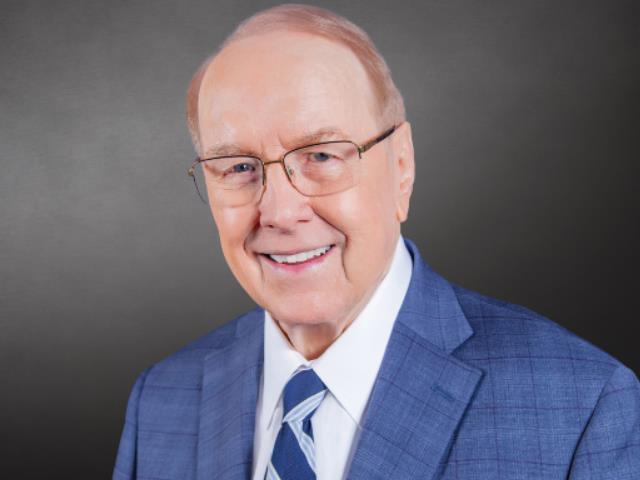
Real love can’t be forced, and it can’t be caged. On today’s edition of Family Talk, Dr. James Dobson draws from his book, Love Must Be Tough, to teach why respect is the foundation of every lasting romantic relationship. He explains why grasping and smothering drive a partner away, how healthy love gives freedom, and what it means to defend the line of respect.
Dr. James Dobson: You're listening to Family Talk, the Radio Broadcasting Division of the James Dobson Family Institute. I am that James Dobson, and I'm so pleased that you've joined us today.
Roger Marsh: When someone you love begins pulling away, everything inside you may want to chase after them. Fear takes over, emotions intensify, and suddenly saving the relationship can feel like the only thing that matters. Well, on the last edition of Dr. James Dobson's Family Talk, we heard Dr. Dobson explain why respect and dignity are essential ingredients in lasting love. And on today's program in part two of this classic teaching based on his best-selling book Love Must Be Tough, Dr. Dobson takes that principle even further, revealing how fear, insecurity, and desperation can create a damaging cycle between two people. And breaking that cycle may require doing the very thing that feels completely wrong in the moment. Welcome to Family Talk, the broadcast division of the Dr. James Dobson Family Institute. I'm Roger Marsh, and here now is Dr. James Dobson to introduce today's program.
Dr. James Dobson: I want to talk to you today about romantic relationships and about principles of marriage, good marriage. Respect is the fundamental ingredient in romantic relationships. Respect precedes love. And you cannot build respect when you are treating yourself disrespectfully, when you're grabbing and holding another person. Now, listen carefully. Respect is the fundamental ingredient because you want in romantic relationships essentially what you can't have. You don't want what you're stuck with. You don't want someone who grabs, who builds a cage around you, and who begs and pleads and cringes in fear, who grovels. Marriages begin to disintegrate when one party usually begins to feel trapped. There's a cage around them. I am stuck in this situation. Now, I want I want to give you a very simple little illustration. You have a man and a woman who pledge themselves to be married forever, to love one another and to stay married to each other side by side for the rest of their lives. And so they go into marriage like this. But in that moment that I just described where respect begins to die, what happens is that one of the two begins to drift. It's usually only one. That why there's usually only one member of the marriage that wants to come to marriage counseling. The other one doesn't want to come. Because he's really not interested in it. He already feels trapped and the counselor is going to try to put it back together. So there's a drifting. Some of you are in dating relationships right now. And you you're probably thinking I'm the drifter. Or the person I'm going with is a drifter. You know who it is. A gap is opened up. Now, in marriage that gap is highly threatening and disturbing to this person because they can feel it. I mean there there are things that ought to be said when you pass in the hall or when you get up in the morning and the last thing before you go to bed at night, and those things are not said. And the person doesn't reach for you, doesn't touch you, doesn't do nice things for you, doesn't communicate that need and and you feel it. So the gap is opened up. Now, what is the the natural unthoughtful thing for this person to do?
Guest (Male): Follow.
Dr. James Dobson: Follow. So that what happens. Typically, this person comes racing after him. All right? And that closes the gap again. How does this one react to that? Yeah, he moved away because he needed space. Could be a man or a woman. And therefore, he moves again. And then this one's a little more desperate and begins to move farther. I tell you folks in marriage counseling, that is the typical scene right there. It happens. Every marriage counselor alive has seen this. And you got the second person going. Now, this person is starting to panic. Panic leads to appeasement. Appeasement never draws a person towards you. It always sends them the other way. Now, I talk to people in marriage counseling in that situation where a wife is so panicked that she's going to lose her husband in a moment like that, that she'll actually allow him to have other women or even bring them into the bedroom. That's not uncommon. She knows that he has other women, but she'd rather have him with a number than not having at all. And so she begins to permit things. Does that draw him back? No, because it violates respect. He's being disrespectful to her and she's tolerating it. She's groveling. And again, it could be masculine or feminine. I'm not not saying it's all one way. All right. So this hand over here is is chasing the other one. And it reaches a point as they move away where the panic is so great that this one grabs and holds. Loses the confidence and begins to to smother the other person and beg for their attention and plead for them not to leave. And that's the ultimate disrespect and the relationship is usually dead at that moment. Just as it would have been with Shirley in the car on that uh occasion, you see what she really did. I I pulled out here. What she do? She went this way. What that do to me? Brought me back. I can't tell you why it works that way. I don't know why we are constructed like we are. But that's the way it often works when you got one that pulls out here. The best thing this one can do is pull this way. Why? Because it communicates to this one you are free. You're not trapped. You're not obligated. You're here of your own free will. Not only can you get away, but maybe that's best. I'm only half the relationship. Now, obviously, I'm not suggesting that the the person who is who is the rejectee in a marriage say, well, it doesn't matter. Let's just forget the marriage. I 'm not saying that at all. I am saying that they say to the other partner you married me of your own free will. I couldn't have forced it. There's nothing I could have done to make you marry me. Legally, physically, emotionally, no way I could have made you marry me. You married me because you wanted to. And you will stay married to me because you want to. And not because I force you. I'm only half of that equation. Now, as for me, I'm committed forever because when God joined us together, he made us one flesh. And I'm here for the duration. But I can only make up my mind. I can't make up yours and you're going to have to do it. But in the case of infidelity, you will only have one. That's me. I can't tolerate a number of other people. I can't be a member of a harem. You're treating yourself respectfully. I'm not suggesting that you scream, that you throw things, that you become angry, and that sort of thing. I am suggesting that you maintain a respectful relationship because love must be free. It has to be. God did not force you to love him. You realize he could have done that. Uh there are birds out there outside this window that the Lord put programmed behavior in and they'll build the same kind of nest that 400 generations before them built because they weren't having choice. It's wired in. He gave us no instinctual behavior. Man has no instincts. He wants us to love him, but love must be free. He will not force himself on you. He respects your free will, your choice. And you can relate to him or not. So love must be free. Love must be tough. Which is what I was trying to say here. There are times when you have to say the tough thing. And love really does have to be confident as well because the lack of confidence that produces panic and appeasement produces divorce and disaster. Do you understand that? That come through? Let me hear your your perspectives on it, your questions on it. Yes.
Guest (Female): What are some guidelines to know where to draw the line between showing a person that you care about and and actually chasing them?
Dr. James Dobson: It really needs to be something that you feel way down here. You know when you are groveling, you really do know it. Uh when it 's not matched on the other side, when the other person is not communicating the same things back, when you find yourself doing a lot of worrying and your hands get sweaty when you think about the relationship, and when your heart thumps a little bit because you believe you might be losing them. Someone said if you love something, set it free. If it comes back to you, it's yours. If it doesn't come back, it never was yours in the first place. Uh we had some problems with uh with coyotes around our house in uh Los Angeles. We lived in the foothills uh there in Los Angeles. And these coyotes would come down at night and rob the trash cans and just create a nuisance. And uh they were just all over the place for a period of time. And I looked out the window one morning and there was a uh a little pup, a coyote pup trotting down the middle of the road with his ears sticking up. So I ran out there and I got behind him and I managed to run him into my backyard. And I closed the gate and I had him back there. Then it took me about an hour and a half to trap him. I chased him all over the place and I got a butterfly net and I finally got that over his head and kind of pinned him so that he couldn't bite me. And then I put a collar on him and a leash. And I had me a coyote pup on a leash. And he went absolutely bananas because everything his mama had told him about people had come true, you know. And he is leaping and jerking and biting at that leash and trying to get free. And uh I had him back there in the backyard uh through the morning and I tried to feed him and he wouldn't eat and tried to give him water and he wouldn't drink and uh I brought in the neighbor kids and they were all fascinated with him. We just we just had fun with him through the day. I thought about making a pet out of him. So I I called my father who knows uh a lot about wild animals and I I said, can I ever tame this coyote pup? Can I ever make him my own? Can I ever take the wild out of him because he was he was raised to this degree in the wild? And my dad says you really never will. Now, you'll get him where he won't bite you and you'll get him where he'll live there, but he will never really be yours. He will always have the wild streak in him. And to some degree, he will always be your captive. And about 5:00 that afternoon, I called the Department of Fish and Game. They came and they picked him up and they took him up in the mountains and they let him go. Why? Why didn't I keep him? Because he wasn't mine. I would have kept him under protest. I couldn't love him because he would not have been there of his own free will. Love must be free. If you love something, set it free. If it comes back to you, it's yours. If it doesn't come back, you never owned it at all. That is very true in romantic relationships before marriage and after. Question right there.
Guest (Female): What are some precautions that we can take as teenagers in our dating lives so that we can make sure we have safe marriages?
Dr. James Dobson: First of all, I think it's very important to understand the differences between males and females. The radical differences between the sexes. Uh we've been told in the last 15 to 20 years that males and females are identical except for the ability to bear children. And that is absolute nonsense. That's foolish. God made two sexes, male and female. Created he them. Male and female. And he made us radically different. And it's in that difference that the beauty and the complexity of the human personality comes together because it's when the two of them are expressed together that you have completeness and you have wholeness. Uh males and females are different in uh the way they respond socially, they differ psychologically, they differ emotionally, they differ sexually, uh they differ uh literally in every cell of their body because they carry a different chromosomal pattern. You can change the way they look and you can grow the hair different and you can put lipstick on and you can change a few things. You can't change masculinity and femininity because it's locked into every cell of the body. You can't change that. We are very different creatures. One of the primary ways that we are different has to do with this need for romantic involvement. You must understand that men and women see that differently. Men can be very contented in a marital relationship uh or in a romantic relationship where there's really not a lot of emotional content with the other person. Where there is um just a kind as I said before, a kind of a business partnership. And that drives a woman crazy. Uh for one thing, women need to talk more than men do. And that comes as a bulletin, didn't it? I mean you're really surprised to find that out, aren't you? That women, that girls talk earlier than guys. They talk better than guys and they talk more than guys uh and coming through the preschool years. They just are more verbal. Someone said that uh that women may have a need to express 50,000 words per day. And the men may have a need to express 25,000. So he comes home from work with his 25,000 spent and she still has 25,000. She's dying to get set. And and he's grunting and groaning and not really engaging in her. To the guys who are here, I strongly suggest that both in dating and in your romantic relationships after marriage that you maintain that oneness, that closeness. It is not enough to simply earn a living for your family, uh to be faithful to your wife, to meet the needs of your children. Something greater is needed. And that's that romantic aspect because your wives are going to need it. And counselors like myself hear that over and over and over again uh in counseling that women are frustrated. Now, to the women who are here, let me say that your husbands can never be what you fully want them to be. They are not made like you. Men can't talk to you like another woman can talk to you a man can't meet all of your needs. And I think American women have a tendency to expect too much from their men and too much from marriage. So they go in with this high level of expectation that it's just going to be you know rose-covered cottage and they're going to laugh and they're going to romp and they're going to have a good time and they're just going to go through life and it's all going to be so romantic. And then it turns out to be a lot of hard work. You know and most of life is getting the chores done and going to work and cleaning the garage and vacuuming the floor and wiping snotty noses of kids and changing diapers and a whole lot of it is like that. And it's not what she thought it was going to be. And if you go into marriage with that expectation, you're going to be agitated and you're going to be mad at him. But it's the way it is. So lower your expectations and guys do what you can to meet them. Pretty good combination. Anybody want to comment on that? Yes.
Guest (Female): Um well, I tried all those things with a past relationship and I was just wondering um since we do talk more um we should I think we should initiate the conversation. And when we try and they don't talk, what do you do then?
Dr. James Dobson: Well, you first of all, you have a a pretty good taste of reality of what life is going to be like if you choose to marry that person because some guys are even less verbal than others. You know what I found is that uh some women are drawn to the strong silent type. I mean that's the reason they like the guy is that that they're emotional and up and down and they get all excited and they get depressed and everything and he's steady and he's solid and he's quiet and he's he's in control and everything. So they're drawn to him. And then they chew him up for the next 50 years because he won't talk to him. But what you see is what you get. And when you're dealing with a guy in the dating relationship who simply can't communicate and won't communicate, understand that as you take the relationship farther because that's who he is. And he's going to have to do that for you too. You know there are things about you that'll bother him. And you guys just have to decide whether or not you can live with that because you don't change people a whole lot. They don't change a lot after marriage. Did you know folks that research shows and this this is classic research done by two surgeons named Penfield and Rasmussen. If you ever get a chance to read this research, it's really very interesting. Uh 20 30 years ago, they were neurosurgeons who had to do surgery on people with them conscious. In other words, they would open the brain and they would be doing neural surgery with the patient semi-conscious. And they found that when they touched a little electrode to various parts of the brain, the people experienced an earlier episode of their lives in living color just as though it had originally happened. They touch it here and all of a sudden he's 5 years old and it's a birthday party and the aunt comes in and everybody sings and he relives that. Your memories are locked in there. No one knows how. It's chemically coded on the nerve endings apparently. But it's all there. And so you're a product of those things that have brought you to this moment. And those don't change very much. Now, I'm not saying you can't change bad behavior and God can't make you a new creature and and all that sort of thing. But these these personality characteristics go into marriage with your eyes wide open. Someone said you should keep your eyes wide open before marriage and half closed thereafter. And that's that's pretty good advice right there.
Guest (Male): Should you confront your spouse or your girlfriend with a lot of the pet peeves or some things that get on your nerves, you know? Cuz I'm thinking that you don't want bitterness to build up inside. You just said to talk to pastors and friends or whatever. But if you can do it in a tactful and loving way, is that
Dr. James Dobson: Yeah, you know what? You've dealt with a a chapter in Love Must Be Tough because I I talk about defending the line of respect. If uh Shirley is going to fix a big dinner for me tonight and I know that and it's uh it's our anniversary. It's a special time. And I know she's gone to the store and she's working on this big dinner. It's a candlelight thing. And I'm working at my office and I get interested in what I 'm doing. And I don't call her. And I come home an hour and 20 minutes late and the food is cold. She's not going to let that pass. I guarantee you that sweet lady you've seen around here can defend the line of respect very well. She will say to me, she won't get mad, she won't scream, she won't call me names, she won't say she's going home to her mother. Uh but she will say, you know that felt disrespectful to me. That I went to this trouble and you know I did it because I loved you and you didn't really care enough to call me. That bothered me. I hope you don't do that again. She's defending the line of respect. Now, uh sometimes within the Christian concept, our understanding of what it means to love and to give and to hardly notice leads us to shove down great resentment and great anger over real wrongs that are being done. And when you do that, it stores. And I guarantee it's coming back. At some point, it will boil over and the acid, the bile that comes back will damage the relationship. Uh I think it's a whole lot better not because you got rights. You know a lot a lot of Christian speakers talk about the fact that you have no rights. I agree. God has all the rights. You have rights in marriage. But it's not that you're defending your rights. You're defending the relationship. What you have going together is important enough to say that's not healthy to it. The things that Shirley and I tend to fight over are the things that one of us interprets as damaging to the relationship. And we'll say, hey, I can't let that pass. That's not good. And you get it out and it's over and we go on and it's forgotten. Managing this kind of anger, managing irritation is one of the fine arts of marriage. If if you can get that done, you're doing fine. I heard of a 12-year-old boy who never spoke a word. 12 years, never a word. And his uh parents were very frustrated and they just couldn't get him to talk. One day he was sitting at the table. His mother put the food on the table and he suddenly pushed the plate aside and he said, I am not eating this slop. And the parents were ecstatic. They jumped up and they ran around and they said, Johnny, we didn't know you could talk. You've never said a word before. How come? He said, up to now everything's been okay. Uh I hope that you guys will not have that problem in communicating with your wives. Thank you.
Roger Marsh: Strong relationships aren't built by avoiding every disagreement. Sometimes love means having the courage to address what's wrong calmly, honestly, and with respect before hurt and resentment have an opportunity to take root. You're listening to Dr. James Dobson's Family Talk. We've been featuring the conclusion of a classic message Dr. Dobson gave on love, marriage, and relationships. Now, if you missed either part of this special presentation, you can listen again or share these programs with someone you love. Go to drjamesdobson.org or jdfi.org and you can find that information. On today's program, Dr. Dobson reminded us that healthy love requires both commitment and freedom and that fear can sometimes cause us to hold so tightly to another person that we actually damage the relationship that we're trying to protect. These are lessons found in Dr. Dobson's book called Love Must Be Tough. And we've taken these timeless principles and packaged them into a five-day email series delivered straight to your inbox. You can sign up to receive yours when you go to drjamesdobson.org and search for that title Love Must Be Tough and specify that email series. Again, drjamesdobson.org Strengthening marriages and helping families build their lives on biblical truth, those two principles remain at the core of the ministry of the Dr. James Dobson Family Institute. Through Family Talk and our many resources, we are here to encourage you through every season of marriage, parenting, and family life. And we're able to do so because of friends like you who pray for us and support us financially. Your tax-deductible donations help us continue providing trusted biblical encouragement to families every day. And you can give a gift online through our secure website. That address is drjamesdobson.org or jdfi.org You can also speak with a member of our constituent care team. That number is 877-732-6825. That's 877-732-6825. And don't forget our ministry mailing address if you'd like to send your donation through the US Postal Service. It's Dr. James Dobson Family Institute, PO Box 39000, Colorado Springs, Colorado. The zip code 80949. Well, I'm Roger Marsh and on behalf of all of us here at Family Talk and the Dr. James Dobson Family Institute, thanks so much for joining us today. Be sure to tune in again next time right here for another edition of Dr. James Dobson's Family Talk, the voice you trust for the family you love. This has been a presentation of the Dr. James Dobson Family Institute.
Related Episodes
Al Cason: The Testimony of a Restored Life, Part 1
Thursday, October 15
Preparing for Adulthood: Love Must Be Tough, Part 1
Tuesday, October 13
Modeling Integrity for Your Kids
Monday, October 12
Related Videos



About Family Talk
Family Talk is a Christian non-profit organization located in Colorado Springs, Colorado. Founded in 2010 by Dr. James Dobson, the ministry promotes and teaches biblical principles that support marriage, family, and child-development. Since its inception, Family Talk has served millions of families with broadcasts, monthly newsletters, feature articles, videos, blogs, books and other resources available on demand via its website, mobile apps, and social media platforms.
The Dr. James Dobson Family Institute (JDFI) is a Christian non-profit ministry located in Colorado Springs, Colorado. Founded initially as Family Talk in 2010 by Dr. James Dobson, the organization promotes and teaches biblical principles that support marriage, family, and child development. Since its inception, Family Talk has served families with broadcasts, monthly newsletters, feature articles, videos, blogs, books, and other resources available on demand via their website, mobile apps, and social media platforms. In 2017, the ministry rebranded under JDFI to expand its four core ministry divisions consisting of the Family Talk radio broadcast, the Dobson Policy and Education Centers, and the Dobson Digital Library.
Dr. Dobson's flagship broadcast called, “Dr. James Dobson’s Family Talk," is aired on more than 1,500 terrestrial radio outlets and numerous digital channels that reach millions each month.
About Dr. James Dobson
Dr. James Dobson is the Founder Chairman of the James Dobson Family Institute, a nonprofit organization that produces his radio program, “Dr. James Dobson's Family Talk.” He has an earned Ph.D. from the University of Southern California and holds 18 honorary doctoral degrees. He is the author of more than 70 books dedicated to the preservation of the family including, The New Dare to Discipline, Love for a Lifetime, Life on the Edge, Love Must Be Tough, The New Strong-Willed Child, When God Doesn't Make Sense, Bringing Up Boys, Bringing Up Girls, and, most recently, Your Legacy: The Greatest Gift. Dr. Dobson served as an associate clinical professor of pediatrics at the University of Southern California School of Medicine for 14 years and on the attending staff of Children’s Hospital of Los Angeles for 17 years in the divisions of Child Development and Medical Genetics. He has advised five U.S. presidents and served on eight national commissions. Dr. Dobson has been married to Shirley for 64 years, and they have two grown children, Danae and Ryan, and two grandchildren.
Contact Family Talk with Dr. James Dobson
540 Elkton Drive
Suite 201
Colorado Springs, CO 80907
Phone Number
877.732.6825