Ask the Experts: Worldview
Ministries > Family Talk with Dr. James Dobson
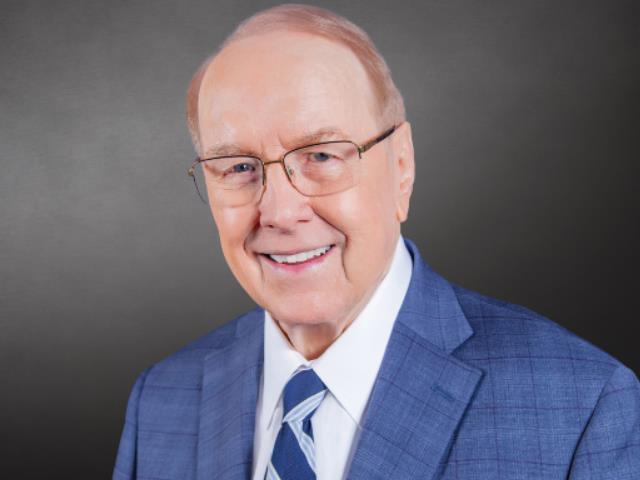
Only a small percentage of Christians can explain what they believe and why. On today’s edition of Family Talk, Dr. James Dobson gathers a remarkable panel of apologetics experts, including authors Dr. Frank Turek, Lee Strobel, and Dr. Gary Habermas to make the case for the resurrection, absolute truth, and a biblical worldview.
Dr. James Dobson: Welcome everyone to Family Talk. It's a ministry of the James Dobson Family Institute, supported by listeners just like you. I'm Dr. James Dobson, and I'm thrilled that you've joined us.
Roger Marsh: Well, welcome to Family Talk, the broadcast division of the Dr. James Dobson Family Institute. I'm Roger Marsh. If you invited 100 committed, born-again believers to a backyard barbecue, how many of them do you think would actually hold a biblical worldview? According to one well-known study, that number is just nine out of 100. Isn't that shocking? Well, on today's Family Talk broadcast, Dr. James Dobson sits down with an impressive panel of Christian thinkers and apologists. The lineup includes Josh McDowell, Lee Strobel, Dr. Frank Turek, Dr. Gary Habermas, Dr. Erwin Lutzer, Dr. Del Tackett, and Dr. Alex McFarland. That is a lot of wisdom gathered in one room. Together, they will tackle the big questions of faith: what a Christian worldview really is, why so few believers actually understand it, and how to give a clear, confident answer for the hope that we have in Jesus Christ. So, find a comfortable spot and settle in. Here now is Dr. James Dobson, starting the conversation with his panel of experts.
Dr. James Dobson: Alex McFarland is one of the individuals on the stage here with us today. Explain the word apologetics.
Alex McFarland: Apologetics is an ancient legal word that means a defense, a reason, a justification for why we believe what we believe. In other words, prove your case. It's found in verses like 1 Peter 3:15 that says believers are to be ready always to give an answer to anyone who asks a reason for the hope that is within you. An answer, a reason why we believe what we believe—that's apologetics.
Dr. James Dobson: Dr. Del Tackett, what you are attempting to do is to get a Christian worldview across the people and, amazingly and depressingly, most people don't understand a Christian worldview.
Del Tackett: No, that's true. They don't. That's exactly the problem we have right now today in our culture. Barna had a study not too long ago where he attempted to try to determine the percentage of Americans that had a biblical worldview. The response to that survey showed that only 4% of Americans have a biblical worldview. That was based upon 10 basic fundamental questions from the Scriptures. He then sliced that data to look at the born-again believers in America, and it jumped up to an anemic 9%. That means 9% of people who say they are committed to Jesus Christ, they've had a born-again experience with Him, do not understand what a Christian worldview is.
Dr. James Dobson: So, 9% of people who say they're committed to Jesus Christ, they've had a born-again experience with Him, do not understand what a Christian worldview is.
Del Tackett: That's correct. So, if you had a barbecue and invited 100 born-again believers to your home, 91 of them would not have a biblical worldview.
Dr. James Dobson: What is a biblical worldview?
Del Tackett: It's a great question. I think the best way to illustrate that is if you were to simply view yourself standing in the middle of a large navigational compass. There isn't a direction that you couldn't turn and gaze out upon all the areas of life that God has not given us His truth claims about life.
Dr. James Dobson: Lee Strobel, you've also written a book on that very subject.
Lee Strobel: Right. And interviewed Dr. Habermas and others about it. I was an atheist. I was someone who doubted the resurrection was true. I grew up asking questions that I didn't have anybody to give me answers to. I began to suspect that things like the resurrection were fairy tales and made up and make-believe. Then I learned about evolution in high school and I thought, well, that puts God out of a job. Later, after marrying a woman who was an agnostic and she ended up coming to faith, I began to see positive changes in her character and her values and so forth. It encouraged me to investigate the evidence. Few people actually take the time to do that. I spent nearly two years of my life delving into the evidence for whether or not the New Testament can be trusted, whether or not the resurrection of Jesus Christ is an actual historical event that we can depend on. I came away with the conclusion that Jesus not only claimed to be the Son of God, but that He proved it by the resurrection, which I think is the best-attested event of ancient history.
Dr. James Dobson: Have you found yourself in debates with those who were coming from the other side?
Lee Strobel: Oh, sure. Yeah.
Dr. James Dobson: How does that evidence hold up?
Lee Strobel: I'll tell you how it holds up. I'll give you a good example. I did a television show for the Pax Network called *Faith Under Fire*. We had scholars like Dr. Habermas and William Lane Craig and others who make a career of debating atheists. We did one of those debates in Chicago and we took a vote. Among the people who walked in as avowed atheists—and we had thousands of people there—over 84% said after hearing the case for Christ and the case for atheism, the case for Christ was by far the most persuasive. We had 47 confirmed atheists who walked in the door, heard the debate, and walked out as followers of Jesus Christ because of the power of the evidence. When I was working on my book *The Case for Christ*, I was interviewing a scholar about the evidence for Christianity. During a break, he paused and he said, "I just want to tell you, nobody's going to read your book." I said, "Really? Why not?" He said, "Well, we live in a postmodern world. Especially young people today, they don't care about evidence for the resurrection. They don't care about historic reality. They don't care about truth. You've got your truth, I've got my truth. It's a postmodern world." I remember going home and telling my wife, "Nobody's going to read my book. I wasted my time." And yet, the single biggest group of people who've written me to say that they have come to faith in Jesus Christ through the evidence in the book *The Case for Christ* have been 16 to 24-year-olds. So, I think this idea that somehow young people don't care about truth and don't care about reality and don't care about historical evidence is just not supported by the evidence.
Alex McFarland: They want answers. They definitely want answers. As it's illustrated by all the people who are here this weekend, Dr. Dobson. When Dr. Habermas lays out the evidence for the resurrection or Lee lays it out, the skeptic may say, "Miracles can't happen, so therefore, I'm not going to believe in the resurrection." But what's the greatest miracle in the Bible? The greatest miracle in the Bible is not the resurrection. It's the first verse. If the first verse of the Bible is true, every other verse is believable. If the universe was created out of nothing by God, He can do anything else He wants in the universe. We now have scientific evidence that the universe was created out of nothing. Now, what is nothing? Aristotle had a good definition of nothing. Nothing is what rocks dream about. So, there was nothing, and then this entire space-time continuum leaped into existence. So, miracles are not only possible, it is probable, given the evidence.
Dr. James Dobson: Del, what percentage of people in the church believe in absolute truth, or what Josh calls universal truth?
Del Tackett: Well, I think I'd probably ask Josh. He knows those statistics very well. Let me turn it over to him.
Josh McDowell: Of adults that would consider themselves born-again—in other words, would say I've personally trusted Jesus Christ as Savior and Lord, and if I were to die today, I know I'd go to heaven because He is my Savior and has forgiven me my sins—it'd be right about 9%, almost identical to youth. The reason is the stats that Del and I talked about this morning on belief is a reflection of the parents, of the adults. Now you're finding very little difference in the statistics on beliefs between young people and the adults in the church.
Dr. James Dobson: I don't understand how you can call yourself a follower of Jesus Christ and not believe in absolute truth. What people say about that is that's fine for you, but absolute truth is different for every person. I don't know how they come up with that either, but they do.
Josh McDowell: You see, so many young people who are coming to Christ today within the body of Christ, over half of them I'm convinced are not coming to Christ because He's the way, the truth, and the life. They're coming to Christ because He's the best thing that's come along so far. Almost all faith today is self-centered, individualistic. What can it do for me? Forgiveness is only good if it takes away my guilt. It has nothing to do with God. You talk to any youth pastor, as soon as something comes along that's to be better, they're gone. This is why I agree with all these gentlemen here. We've got to get back to substance within our message. Several weeks ago, right here in Colorado, I spoke to 450 junior high and high school kids. I gave my testimony and in there, I showed how I struggled with the deity of Christ, the Scriptures, and the resurrection. I said, "You know the problem? There might be two of you here out of 450 whose parents are in full-time Christian ministry. I said there might be two of you that could give me any intelligent answer why you believe the Bible's true." They all started looking at each other, and I said, "Tell you what. Tomorrow afternoon, last day of the conference, they were packing to go home, I said at 4:00, I'm going to be outside blistering hot. I'll be under that tree. If you want to come out there, I'll take one hour and not a minute more and I'll tell you why I believe it's true." Dr. Dobson, the next afternoon at 4:00, 232 kids showed up. I literally thought it'd be 25 or 30.
Dr. James Dobson: They want to know.
Josh McDowell: They really do.
Dr. James Dobson: We have, I think, convinced ourselves that they don't want to know, that no one wants to know, and we're intimidated to tell them or even mention the name of Jesus Christ for fear we'll offend somebody. But the truth of the matter is they're desperate for meaning.
Josh McDowell: They really do. But here's what we've done. In the postmodern worldview, we have essentially put them on a cork, put them in an ocean, and said, "There is no shore." They want a rock to stand on. If someone will come to them that says there's a rock and a shore, they want to listen to it. But you better be sincere about it from the standpoint of the fact that they can smell hypocrisy a mile away.
Erwin Lutzer: Could I say also that something contributing to the doubt that young people have is the fact that we are living in an era where we have the proliferation of other religions? Young people say to themselves, "Well, I'm a Christian, but there's the Muslim faith and there's the other faiths." That's why I think it's so wonderful that even at this conference that we're having, we are actually having some breakout sessions and some sessions on various kinds of religions so that young people understand the difference. My message is, that I feel so deeply about, is that we must point out that Jesus is the only qualified Savior. Come with me to 1993 in Chicago, the Parliament of World Religions. 5,000 delegates from all over the world meeting to try to unify the religions of the world. I was there the whole week. I went into the area where all of the literature from 100 different religions was handed out and I went on a search for a sinless Savior. I began with the Hindus and I said, "I'm a sinner and I need somebody who's not a part of my predicament to save me. Does Hinduism have a sinless Savior?" No, we don't. I went to the Buddhists, Baha'u'llah, Enlightenment, but not sinlessness. It dawned on me that Jesus is sinless. He's the only one qualified to give us the kind of righteousness that a holy God demands that we have as sinners, and therefore He's the only one who has the qualifications of Saviorhood. We need to be able to say to young people today, "Other religions have gurus and prophets. Much of what they say might even be good, live this way, etc. But there's only one person who is able to credit us with the righteousness of God so that we can be in God's presence declared as holy as God Himself is. There is no one else out there who meets those qualifications."
Dr. James Dobson: That is so good. When I wrote *Life on the Edge*, which was written for those between 16 and 26 to help bridge that gap from childhood to adulthood, we did focus groups to see what young people in that age group were thinking. After a good number of them, the data showed the number one issue they care about of all the things—making money, fame, fortune—all the things that they care about, the number one issue was meaning. They don't know why they have meaning. Nobody has told them why they have meaning. Why would they draw that conclusion? Because they're sitting in school where they tell them that they came from meaningless matter that somehow coalesced. Why would they have meaning? Only Christ can give that meaning. It's not just that they want to know how to share their faith. They want to know for sure that their own faith has meaning. In that meaning comes their understanding of life itself.
Alex McFarland: I was in New Jersey over Easter weekend doing an apologetics weekend in a church. On Saturday night, we had several hundred teenagers there. Before the event, we had a dinner with the youth leaders that had organized this—teenagers from New Jersey churches. We had a little Q&A time and it was really interesting. One young lady, she was an 11th grader named Allison, she said, "A lot of the grown-ups just think that we teens are only interested in pizza and concerts, but we want to know the deep things of God and we are ready for it." I said, "Whoa, hit the pause button." I said, "How many agree with that statement? You want to know the deep things of God, and even though a teen, you say, 'Hey, I'm ready for it.'" It was the whole group of youth leaders. Dr. Lutzer's got it right. We have to pass the knowledge of Jesus Christ onto the younger generation. A lot of religious leaders have claimed to represent God. Jesus claimed to be God. Some people spoke for God. Jesus spoke as God, and He validated His identity by rising from the ground—the only one in history who ever did that. The world needs to know, especially the teens, that Jesus is real.
Dr. James Dobson: And that's what motivates you. David, tell us about your conversion.
Josh McDowell: Well, surprisingly enough, we had Norm Geisler speak over at the summit the other day. He said that God reached down and picked up someone who had a very filthy mouth and within two days, he was out on the street corner preaching the Gospel. He got saved and two days later he was preaching. I was thinking to myself, "Boy, that sounds very familiar." Because when I met the Lord in a camp, by the way, in Michigan, I had the filthiest mouth on the block. In fact, our neighbor—I tell the kids this too, and I don't think any believe me, but my mother were alive today she'd tell you—our neighbor was a Marine in the Second World War. One day he got a hold of my mother and he said, "Shut that kid up. I've been through five campaigns in the Pacific and I haven't heard that language." When I met the Lord at this camp in Michigan, you might say that the Gospel doesn't change your life, but from that time on to the present time, I can't really believe that I've used God's name in vain. That to me would be an utter miracle. When I got home, by the way, from camp, the neighbors gave me a nickname, AC and BC: After Camp and Before Camp. They didn't know it was Christ. They just thought, "Hey, the kid went to camp. I wonder what's going on now." And then the windows came up in the neighborhood too.
Dr. James Dobson: Gary, let's suppose that I'm 17 years old and I come to you and I say, "I want to ask you some questions. I was raised in a church and my parents are Christians, but I'm having a real hard time believing that Christ is the Son of God who came down from heaven with a mission to save those of us who are in sin, all of us in sin. I can't accept that. Is there any way you can help me with my faith? Is there any evidence that that is true?"
Gary Habermas: Yeah, I'd like to know where the person's coming from, but we have this common conception today where we say all religions are the same. They all teach virtually the same truth. Smooth away the rough edges and they're saying the same thing. Jesus is the only founder of a major world religion who ever claimed to be deity. There are no other takers. I mean, there are no other takers from their own lips. Jesus is the only founder of a major world religion about whom miracles are recorded within a generation. Jesus is the only founder of a major world religion who said what you do with Me determines where you spend eternity. This is conceded by every critical scholar who writes. Jesus is the only founder of a major world religion who said, "My death is going to be essential for your salvation." And Jesus is the only founder of a major world religion who not only predicted His resurrection, but did it. What I'm saying is, I'm not saying as a Christian, we know that these are the only ones because that's what we believe. I'm saying nobody else, no other major founder even claimed any of these things. Now when the person hears that, they usually fall back to this, "Aren't we all the same?" But I would go immediately to the resurrection. I would say Jesus made these incredible claims. He claimed to be the Son of Man. He claimed to be the Son of God. Then He was raised from the dead. I would like this fellow to tell me how else can I take the evidence except as a confirmation of who He said He was. This is not a big philosophical argument, but just a real brief question for him and that's this. If Jesus is only a man and if the evidence shows He was raised from the dead, what happened? I think God would have had to have acted upon him. If God acted on his dead body, then I would think the best explanation is God approved of what He said. Of everything Jesus taught, probably the two most offensive things He taught vis-à-vis the other world religions is "I am deity" and "What you do with Me determines where you spend eternity." Those are pretty exclusive claims. Why is He and He alone raised from the dead?
Dr. James Dobson: Frank, any last thing you want to say?
Frank Turek: Well, I was just going to say, I came to faith back in 1985. I was in Sacramento, California, in flight school. I had a roommate who was the son of a Methodist minister, and I had all sorts of skeptical questions. One day, it happened to be a Sunday morning, we were sitting over breakfast and I said to him, "Mark, I just can't believe that there is a good God with all this evil." We discussed that before. "And I really just can't believe Jesus is the only way. I mean, I just think that's way too narrow." He said, "Well, I believe what the Bible says. 'I'm the way, the truth, and the life. No man comes to the Father except through Me.'" And then I go, "I just, that's so narrow." So I looked at my watch and I said, "Well, if we're going to go to church, we'd better get going." We didn't even know where the church was. Somehow we found the church. We were walking in, and we noticed that the church had already been in session. We sat down and two minutes later the preacher on a riser, and all he had was a Bible in his hand, said, "And then Jesus said, 'I'm the way, the truth, and the life. No man comes to the Father except through Me.'" So, Mark gives me the elbow. He goes, "Some people think that's narrow." So then he gives me the real elbow. And he said, "But the truth is narrow. If I want to call my friend John here in the front row, I have to put 10 numbers in exact order. If I get one number wrong, I don't get John, I get a wrong number." He said the truth is very narrow. But as soon as I became a believer, the dictum that Augustine said—believe and then you will understand—really became true in my life. I learned a lot more. I still have questions. I still don't have all the answers. But right now, I think it takes a lot more faith to be an unbeliever than it does to be a believer. And that's why I wrote the book *I Don't Have Enough Faith to Be an Atheist*.
Dr. James Dobson: There are people who have been listening to us through these discussions who are drawn to Christ by what you all have had to say. Talk directly to that person.
Alex McFarland: Dr. Dobson, years ago G.K. Chesterton said this: that an open mind is like an open mouth. Its purpose is to close down on something solid, otherwise, it becomes like an open sewer rejecting nothing. The search is what a lot of people revel in and glory in. It's just the journey, not the destination. But eventually, people have to come to that point where they say, "I volitionally, I willfully choose to respond to what God has revealed to me." The fact is that yes, Jesus is who He claimed to be. In love, He went to a wind-swept hill outside Jerusalem to a cross. Here's love. The very wood upon which He hung, the iron spikes that held Him there, while Christ hung, shouldered the sin debt of the world, the guilt of Alex McFarland. The very instruments of His torture, the cross on which He was crucified, not only was He hanging there, He was sustaining it all in love. He died as a substitute for me, for everyone, rose again. He makes this offer. He says it's a gift, complete forgiveness, restoration, healing, salvation. It's yours simply for the taking. So, I would challenge every listener, if you know about God but don't yet have a relationship with God, this day, pray and say, "Yes, Jesus, I choose You."
Dr. James Dobson: God's blessings to you all. Thank you for taking the time to be with us.
Roger Marsh: The greatest questions of our faith aren't meant to leave us searching forever. They're actually meant, as G.K. Chesterton put it, to finally close down on something solid. And that solid ground is a person, Jesus Christ. You've been listening to a classic edition of Dr. James Dobson's Family Talk, one featuring Dr. Dobson and a remarkable panel of Christian thinkers, including Josh McDowell, Lee Strobel, Dr. Frank Turek, Dr. Gary Habermas, Dr. Erwin Lutzer, Dr. Del Tackett, and Dr. Alex McFarland. Now, if you'd like to hear this conversation again or pass it along to a friend who is wrestling with the big questions of life and faith, you'll find today's broadcast audio link at drjamesdobson.org. Or if it's easier, just type in those initials, jdfi.org. It'll take you to the same place. You know, a program like the one you heard today exists for only one reason above all else, and that's to introduce as many people as possible to the Gospel of Jesus Christ. That is at the very center of who we are here at the Dr. James Dobson Family Institute. Alongside it, we work to strengthen marriages and families, upholding biblical principles that they are built on, and standing for truth in a culture that has literally lost its way. When you donate to the Dr. James Dobson Family Institute, you help carry these conversations across more than 1,500 radio station outlets nationwide and into the hearts of people searching for real answers. Your gift of any amount makes a genuine difference, and we invite you to partner with us today. You can send your tax-deductible donation to our ministry mailing address, which is: The Dr. James Dobson Family Institute, P.O. Box 39000, Colorado Springs, Colorado, the zip code 80949. You can also speak with a member of our constituent care team. That number is 877-732-6825. That's 877-732-6825. Or if it's easier, you can make a secure donation online when you go to drjamesdobson.org. While you're on our website, take a moment to sign up for one of our free email series designed to encourage you right where you are. One favorite is our 10-day series based on Dr. Dobson's best-selling book *Bringing Up Boys*. It's full of practical wisdom for raising sons with courage and conviction. To begin your free 10-day email series, just go to drjamesdobson.org and search for that title, *Bringing Up Boys*. Again, drjamesdobson.org or jdfi.org for short. Well, I'm Roger Marsh, and on behalf of all of us here at Family Talk and the Dr. James Dobson Family Institute, thanks so much for joining us today. Be sure to tune in again next time right here for another edition of Dr. James Dobson's Family Talk, the voice you trust for the family you love. This has been a presentation of the Dr. James Dobson Family Institute.
Related Episodes
The Special Needs Parent, Part 2
Thursday, September 24
The Special Needs Parent, Part 1
Wednesday, September 23
God Makes Lemonade, Part 2
Tuesday, September 22
Related Videos

About Family Talk
Family Talk is a Christian non-profit organization located in Colorado Springs, Colorado. Founded in 2010 by Dr. James Dobson, the ministry promotes and teaches biblical principles that support marriage, family, and child-development. Since its inception, Family Talk has served millions of families with broadcasts, monthly newsletters, feature articles, videos, blogs, books and other resources available on demand via its website, mobile apps, and social media platforms.
The Dr. James Dobson Family Institute (JDFI) is a Christian non-profit ministry located in Colorado Springs, Colorado. Founded initially as Family Talk in 2010 by Dr. James Dobson, the organization promotes and teaches biblical principles that support marriage, family, and child development. Since its inception, Family Talk has served families with broadcasts, monthly newsletters, feature articles, videos, blogs, books, and other resources available on demand via their website, mobile apps, and social media platforms. In 2017, the ministry rebranded under JDFI to expand its four core ministry divisions consisting of the Family Talk radio broadcast, the Dobson Policy and Education Centers, and the Dobson Digital Library.
Dr. Dobson's flagship broadcast called, “Dr. James Dobson’s Family Talk," is aired on more than 1,500 terrestrial radio outlets and numerous digital channels that reach millions each month.
About Dr. James Dobson
Dr. James Dobson is the Founder Chairman of the James Dobson Family Institute, a nonprofit organization that produces his radio program, “Dr. James Dobson's Family Talk.” He has an earned Ph.D. from the University of Southern California and holds 18 honorary doctoral degrees. He is the author of more than 70 books dedicated to the preservation of the family including, The New Dare to Discipline, Love for a Lifetime, Life on the Edge, Love Must Be Tough, The New Strong-Willed Child, When God Doesn't Make Sense, Bringing Up Boys, Bringing Up Girls, and, most recently, Your Legacy: The Greatest Gift. Dr. Dobson served as an associate clinical professor of pediatrics at the University of Southern California School of Medicine for 14 years and on the attending staff of Children’s Hospital of Los Angeles for 17 years in the divisions of Child Development and Medical Genetics. He has advised five U.S. presidents and served on eight national commissions. Dr. Dobson has been married to Shirley for 64 years, and they have two grown children, Danae and Ryan, and two grandchildren.
Contact Family Talk with Dr. James Dobson
540 Elkton Drive
Suite 201
Colorado Springs, CO 80907
Phone Number
877.732.6825


