What Determines What I Hear?
Ministries > In Touch Ministries with Dr. Charles Stanley

When we pray, we often talk and talk—but do we stop to listen for the still, small voice? Dr. Stanley teaches that our relationship with God and the purity of our heart determine whether or not we can hear Him correctly when He speaks. Learn three things that highly influence what you hear when God speaks.
Dr. Charles Stanley: If I am coming to Him as a saved and know that I'm saved child of God, identified in the work of the cross, knowing that I'm accepted not by my behavior but by my belief in Him, not what I'm going to do but because of what He's already done, I'm coming with assurance. I'm coming with confidence. I'm coming with boldness. I'm coming to Him with the assurance that my God is going to listen. It makes all the difference in the world what my relationship with Him is if I'm going to hear and hear correctly from God.
Guest (Male): When you pray, do you look forward to God's answer? Today on In Touch, the teaching ministry of Dr. Charles Stanley, we'll see that what we know and believe about God colors our perception of God, which influences what we expect to receive from Him. Our series on listening to God continues as we answer the question, what determines what I hear? Let's listen in to Dr. Stanley's message.
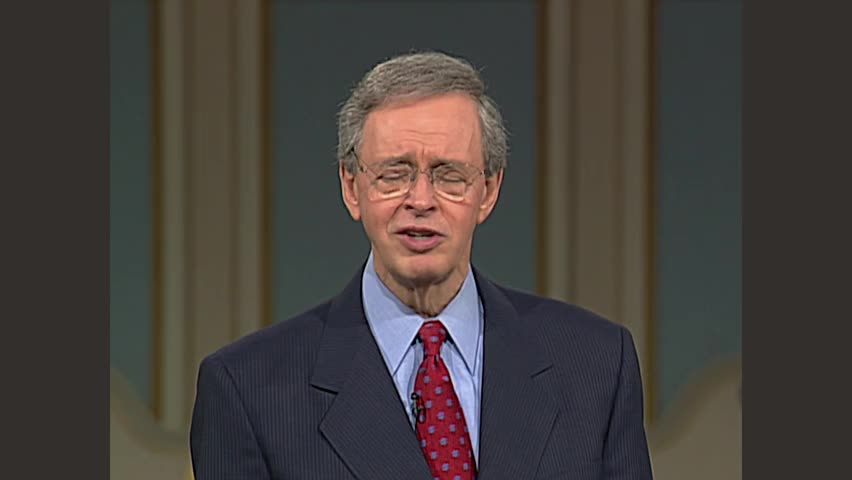
Dr. Charles Stanley: Would you turn to Psalm 81? If you recall that God is challenging His people because of their refusal to listen, and He says, beginning in verse eight, "Hear, oh my people, and I will admonish you. Oh Israel, if you would listen to me, let there be no strange god among you, nor shall you worship any foreign god. I, the Lord, am your God who brought you up from the land of Egypt. Open your mouth wide, and I will fill it." "But my people did not listen to my voice, and Israel did not obey me. So I gave them over to the stubbornness of their heart to walk in their own vices. Oh, that my people would listen to me, that Israel would walk in my ways. I would quickly subdue their enemies and turn my hand against their adversaries. Those who hate the Lord would pretend obedience to Him. Their time of punishment would be forever. But I would feed you with the finest of the wheat, and with honey from the rock, I would satisfy you." Here is what God says He would do if they would only listen. Now, let me ask you a question. What is it that determines what I hear from God? There are three primary things that highly influence, greatly influence, superiority over everything else that influences what you and I hear when God speaks to us, as we know that He does. The first one is this: our relationship with Him. Our relationship with Him highly influences what you and I hear when we pray and we listen to God. For example, a lost person, that is a person who is an unbeliever, maybe somebody like you, you've never trusted Christ as your savior, and you say, well, what am I hearing from God? The only thing you'll ever hear God speak about, the only thing you'll ever hear Him say, is that you are a sinner, that you need to be saved. He wants to encourage you to look to His Son as the only hope of your salvation, looking to the cross, trusting Him as your savior. God will only deal, deal primarily, with your relationship to Him as to your salvation because until that is settled, you're not going to hear God say anything else. You can fabricate in your mind a lot of things, but God is talking to you about your relationship because that's the foundation. That's the first step, and that's where you begin to build a relationship with Him. But now, what about all of us who are believers? What difference does it make what my relationship is to Him as to what I hear? Here's why it makes a difference, and let me show you what that relationship is. That relationship is twofold. First of all, that you and I are saved. That is, by an act of the grace of God, He came from heaven to earth in the form of human flesh, died upon the cross, took upon Himself all the sin of all mankind, and the moment you and I accept His atoning death, His substitutionary death, as adequate payment for our sin, and by faith receive Him as our personal savior, the Bible says that you and I are saved. We're taken from the kingdom of darkness and placed in the kingdom of light. We become the sons of God, and we have assurance of that salvation provided in the word of God. So that my salvation experience, which is the beginning of my relationship, that settles once and for all my eternal security. But that's only part of my relationship, my salvation. The second part of that relationship is my identification. He says that when Jesus died, I died. When He was buried, I was buried. When He arose, I arose, and now we are seated in the heavenlies in Christ Jesus. That is, salvation takes care of my eternal security. Identification takes care of my daily walk of victory. Because I'm identified with Him and have accepted that by faith, sin's power has been broken. You and I are free to walk in the spirit, liberated to become and to be the persons that God wants us to be. Now it is Christ Jesus living His life in me and through me. No longer I, as Paul says, but now Christ. Not our life, but His life. He says Christ, who is your life. So that takes care of my daily victory. So that my relationship to Him is that I'm saved, I'm forgiven, I'm accepted, I'm a child of God, I'm secure, and I have eternal security wrapped up in the cross. Not only that, but Christ Jesus, living His life within me on a day-to-day basis, fits me to live in this world victoriously over the power of sin so that I am freed and liberated. I can have the peace and the joy and the confidence and the acceptance and the assurance that my daily walk with Him is pleasing and honorable to Him. So think about this. What relationship does your salvation and your identification have with what you hear when you talk to God and He speaks back to you? Here's the difference. If I am coming to Him as a saved and know that I'm saved child of God, identified in the work of the cross, knowing that I'm accepted not by my behavior but by my belief in Him, not what I'm going to do but because of what He's already done, I'm coming with assurance. I'm coming with confidence. I'm coming with boldness. I'm coming to Him with the assurance that my God is going to listen, and the God I listen to is a loving God who loved me enough to reach down and save me. Therefore, I can trust what He says to be true in my life. It makes all the difference in the world what my relationship with Him is if I'm going to hear and hear correctly from God. But there's a second thing that's very important: not only my relationship or our relationship to Him, but secondly, our understanding of Him. First of all, I am greatly affected by what I hear by my relationship to Him, but secondly, by my understanding of who He is. Now, I want you to listen carefully because here's what I'm going to do. I'm going to give you two lists of words. Listen to me carefully. It is very, very important that you get these two lists down. The greatest influence, the first influence, oftentimes the most lifelong influence of a person's concept of God, comes from their father. We don't want to assume that responsibility, but it's already there, whether we assume it or not. All of us have been highly influenced in our image of what God is like, in our viewpoint of Him, by our fathers or some authority in our life very, very early. Now, we've described this before, and I want to reiterate it for just a moment. When you and I were born, we had a grid system. Into that grid system was placed either positives or negatives in our minds so that we accepted, not volitionally but unconsciously, we accepted the viewpoint of ourselves as others taught us what we were like. We accepted the viewpoint of God by what we saw in that male authority or what we were taught early in life. So that many of us, all of us, everybody, has received into their mental grid system attitudes, ideas, concepts about God they never chose to necessarily believe, but they were fed to them as children. Then they were added by schoolteachers and Sunday school teachers and preachers and pastors. Depending upon the approach that pastor made, or the approach that Sunday school teacher made, or the ideas about God that mother gave, or the ideas about God that father gave, or the way that father acted toward that son or that daughter. And I'm asking you today, is the God you're listening to the God of this book, or is it a God that you've been pre-programmed by and with that is not the God of the Bible? Which God are you listening to? So here's what I want you to do. On your piece of paper, make two lists. On the left-hand side, I'm going to give you a list. On the right-hand side, a list. You're going to have to make a choice of which one of these Gods you really listen to, which God you're praying to. Because you see, whichever one you're listening to and whichever one you're praying to, it isn't a question of maybe it'll influence what you hear. There is no way in the world for you not to be influenced by what you hear, depending upon your understanding of who God is or your viewpoint of God. All right, so let's begin on the left-hand side. Let's ask the question. First of all, when you talk to God, what kind of Father do you hear from? A loving Father. Write that down. A loving Father. Is it a loving Father who's speaking to you, accepting you, taking you where you are, loving you, forgiving you, listening to you, genuinely interested in you? Is it a loving Father or the opposite of that, a demanding Father who is always raising the standard on you, who wants you to measure up to his expectations? If you make B's, you ought to have A's. If you make A's, you ought to straighten out something else in your life. But somehow, you never quite measure up. A demanding Father who's always lifting the standard. You wither in his presence. You come not as a child of God, not as a child loved by his Father, but you come as one who's creeping and crawling and withering before this demanding Almighty Father, whose super standards are totally beyond your comprehension and your measuring up. So you always feel guilty. You always feel condemned. You're never quite the person you ought to be, and somehow in His presence you never will be. Which kind of God are you listening to? A loving Heavenly Father or a demanding Father who demands that you measure up to what is beyond your possibility? Number two, when you pray, what kind of person do you hear from? Is He, secondly, an intimate friend? Is it an intimate friend that you hear, or is He a distant friend who is only casually interested in what you're interested in? You see, intimacy is a vital part of the Christian life, and God wants to build intimacy with us. One of the evident proofs of that is how did He come to reveal Himself? He didn't come to reveal Himself in some supernatural, immaterial, ethereal body of an angel. He came in the form of human flesh like ours, in the person of Jesus Christ, to walk among men to say, "Here is the real Heavenly Father. You can build an intimate relationship with Him." Today, when we think of intimacy, so many people only think of sex. The greatest intimacy is the intimacy of friendship, emotional intimacy. For example, you have a dear friend. You talk to that friend. You're intimate with that friend. You love them, and they love you. You're sitting in a group, maybe it's a social group, and some subject comes up, maybe controversial or not. The subject comes up, you can glance at that friend in a split second, your eye hits his or her eye, there's a twinkle in both eyes, and instantaneously, faster than you can measure it, you both know in that instant you're in agreement. That's intimacy. And that's the kind of intimacy that God wants to build with us. When you're praying and talking to God and you're listening to Him, is it an intimate friend? Not a friend, "Hi God, how you doing?" but an intimate friend who's there, sharing with you what you want to share, listening to you. A true friend, a genuine friend, a faithful friend. I mean, he's always there. You can always count on him. Or is he this distant somebody, this distant God who may be interested in your prayers or your beseeching him if you happen to be interested in the same things he's interested in? A true friend is not one who listens only when you're talking about what they want to hear. A true genuine friend is one who listens when they're interested and listening and interested whether the particular thing is of great interest to them or not. The way we see God as intimate friend or distant friend will highly influence what we hear. Number three, is this God you're listening to a patient teacher, or is He an intolerant and critical one? Here's the Heavenly Father's. Is this the kind of God you're listening to? "Lord, I blew it again. I should have known better, but I just didn't, somehow I just messed it up." And here's the patient teacher. "I understand that. Let me show you where you went wrong. Let me show you how you blew it. Let me show you why you failed. Let me show you why you stepped out of line. Let me show you why you didn't make it. Let me show you why you're disappointed. Let me show you why you've become discouraged. In order that next time when you get in the same situation, you won't do that again. If you do it again, I'm going to keep on loving you because you've been accepted by grace, not by behavior. I'm going to keep on showing you, and I understand that the Christian life is a growing life, that as I teach you through my Spirit and as you learn, you're going to stumble, you're going to fall, you're going to blow it, but I'm going to pick you up because my ultimate goal is that you become the person I want you to be, and I'm going to keep on hanging in there teaching you." Is that the kind of God you're listening to or, "You blew it again. Can't you get it through your thick skull that when I tell you something, that's what I'm, that's the way to do it? How is it I've told you the same thing over and over and over again and you keep on messing up?" Is that the kind of God you're listening to? And if it is, here's how you come to Him: condemned, guilty, worthless, a nobody, can't amount to anything, just can't get my act together. Friend, the way you see God highly influences what you hear. If you see Him as a patient teacher who understands where you came from, who understands that for all practical purposes that you feel about yourself that you're in left field, God doesn't feel that, and He just takes you right where you are. You see, this critical, this critical teacher doesn't take one where they are. The critical teacher says, "Well, why haven't you understood justification, reconciliation, glorification, having been saved for three weeks?" We'd all be wiped out. You see, but we come to Him, and if our viewpoint of God is not correct, if we don't understand who He is, and we do not come to Him and listen to a patient teacher, but rather we hear an intolerant one who cannot tolerate my mistakes, who cannot tolerate my failures, who cannot tolerate my blemishes, who cannot tolerate getting a C on this test. And you see, God's, God's sending us tests all the time. And sometimes we come up with a B, and that's pretty good. We think, "Lord, I didn't do too bad." So the next time it's an F. "Oh my goodness, God's going to wipe me out for sure." Listen, you can get an F on the next test in temptation, and God's loving acceptance of you doesn't change one iota. But if you come to Him having really blown it, I mean you have really messed it up, and you made the wrong decision and you know you did, in fact, your old pride got in the middle of it and self-will got in the middle of it and you have to come back to Him, "Lord," do you come to a critical, strong, strict, uncompromising but intolerant teacher who berates you, who scolds you, who makes you feel like a nobody because you didn't measure up? I want to tell you, you're not hearing the God of the Bible. You're hearing a prefabricated, pre-programmed God that somebody gave you that did not come from this book. The issue is this. What kind of God, who is this God I'm listening to? All right, not only a patient teacher, but a gentle guide. A gentle guide, that is, all of us at times in our life we get off course. We get off the beaten path. We take detours. We see things over here that we think, "Boy, that looks right." So we take a detour and we get out of God's will. We start doing our own thing. Who is it that you're listening to? A gentle guide who says, "Hold it. You're off track. Let me show you what's going to happen if you keep heading in that direction. Let me show you what's going to happen in your future life, so you need to get back in track." Or He may even chastise us to get us back. But listen, the God of this book does not get angry when one of His children get off track, when we disobey Him. He doesn't get angry. He's grieved in His heart. He comes after us. The Holy Spirit within us, He's there to track us down. He's on the inside to remind us. The old radar system begins to work and the horns begin to blow and the lights begin to flash. You're off track. You're out of the will of God. You're heading in the wrong direction. That is the gentleness of God. He's not harshly saying, "Got off track again. Same old thing. Just can't hear Me, just got to do your own thing." So what does that do? That makes us come back to Him condemned, guilty, full of frustration, fears, and anxieties. That's not the God of this book. And you see, if I come to Him seeing that He is, rather than a gentle guide, seeing Him as a strict guide. Not gentle but strict. You make no mistakes, you don't get one foot off, you don't even look out of the path. You stay right on target. Then what do we have? We're living in bondage. The negatives of all of these attitudes about God do only one thing. They put the people of God in continuous condemning, guilty, fearful bondage. That's one of the reasons the church is so weak today. We're talking to the wrong God. We have a wrong viewpoint. We don't understand Him as He is, and we come to Him like worms. We come to Him as beggars. We come to Him pleading, rather than in faith and acceptance of my position, acceptance of my relationship in Him, and understanding the kind of true God this is that I'm listening to. You know what the problem is? There's so many people in this country who've heard so many negative sermons, who've heard so many sermons that have put them in bondage, in emotional imprisonment, in spiritual prisons. The church today is weak. It is faithless. We're not excited about Jesus Christ. We're not glorifying God. We're not sharing the message of Jesus Christ with boldness and confidence and assurance and joy and peace in our heart because we're scared to death of God. And that's not the God of this book.
Guest (Male): As we heard in Dr. Stanley's message today on In Touch, God has revealed Himself as a loving Father and an intimate friend, someone who desires to patiently teach and guide us. To listen again, you can click on today on radio at intouch.org. And that's where you'll find many of the resources that you need to help you understand more about our Heavenly Father. If you'd like a copy of Dr. Stanley's complete message from today, you can order it from our online store. The title is What Determines What I Hear? Or order the teaching set, Listening to God. Our web address again is intouch.org, or you can call or text us. The number is simply 1-800-INTOUCH. You can also write to us at In Touch, Post Office Box 7900, Atlanta, Georgia 30357 or 1-800-INTOUCH. Salvation is about being forgiven and looking forward to heaven. It's also about your life now. Today's moment with Charles Stanley is on the way.
Guest (Male): There is an inexplicable joy that comes from understanding scripture and learning how to apply it in our own life. The Charles F. Stanley Life Principles Bible includes 30 foundational truths that Dr. Stanley has learned from over 60 years of ministry. It's available in the New King James Version, New International Version, the King James Version, and New American Standard Bible version. To order, call 1-800-INTOUCH or go to intouch.org/store.
Dr. Charles Stanley: What are you living for? What is your goal and objective in life?
Guest (Male): For 60 years, Dr. Charles Stanley's sermons have blessed us. And today, His teachings continue to enrich our walk with Christ through the new Charles Stanley Institute. It's all built so you can live a more abundant Christian life, and it's completely free. Visit us at charlesstanleyinstitute.org. The Charles Stanley Institute: empowering disciples worldwide.
Guest (Male): From the Pastor's Heart is an in-depth teaching letter inspired by the teachings of Dr. Charles Stanley. To receive In Touch's free From the Pastor's Heart letter, call 1-800-INTOUCH or visit intouch.org/pastorsheart.
Guest (Male): You're listening to In Touch. For the person who's placed their faith and trust in Him, Jesus does more than forgive. Here's a moment with Charles Stanley.
Dr. Charles Stanley: When you were saved, I wonder how many of you could say, "When I gave my life to Jesus Christ, it was explained to me that Jesus Christ came to be my savior, Jesus Christ came to be my life." Nobody explained that to me. It's taken me years and years and years of my Christian life to understand that I could have avoided an awful lot of confusion. I could have missed a lot of heartache, and I certainly could have enjoyed years of my Christian life that were a tremendous struggle with me if someone had only explained the simple truth. Because once you're able to grasp the truth, that Jesus Christ not only came to save you, and He did come to save you in order to deliver you from the power of sin in your life and the penalty of sin in your life, He is the Lord and He knows that you and I need someone to rule over us and someone to submit ourselves daily, in order to become, to do, to achieve what God has set out for us. Because you see, if I don't understand that Jesus Christ is my life, I am missing a basic foundational truth in the Word of God.
Guest (Male): You can learn more about what it means to be a Christian at intouch.org. How are you encouraged by today's message? Please let us know. When In Touch returns next time, we'll hear about three more characteristics of God that further reveal His desire for a vital growing relationship with you. I hope you'll join us again for In Touch, the teaching ministry of Dr. Charles Stanley. This program is a presentation of In Touch Ministries, Atlanta, Georgia, and remains on the station through the grace of God and your faithful prayers and gifts.
Related Episodes
Dealing with Temptation Wisely
Friday, September 4
Wisdom in the Midst of Trials
Thursday, September 3
In Search of Wisdom
Wednesday, September 2
Related Videos


About In Touch Ministries
In Touch Ministries is the broadcast teaching ministry of Dr. Charles Stanley.
About Dr. Charles Stanley
Dr. Charles Stanley
September 25, 1932 – April 18, 2023
Dr. Charles F. Stanley was the senior pastor of First Baptist Church Atlanta for more than fifty years. He was also the founder of In Touch Ministries and a New York Times best-selling author, who wrote more than seventy books encouraging people to seek Jesus as their Savior and know Him as their wise and loving Lord.
Known to audiences around the world through his wide-reaching TV and radio broadcasts, Stanley modeled his 65 years of ministry after the apostle Paul’s message in Acts 20:24: “Life is worth nothing unless I use it for doing the work assigned me by the Lord Jesus—the work of telling others the Good News about God’s mighty kindness and love.”
Contact In Touch Ministries with Dr. Charles Stanley
Mailing Address
In Touch Ministries
PO Box 7900
Atlanta, GA 30357
Phone Number
1-800-468-6824


